
IOW Block – Ultrasonic Calibration Standard
The IOW Block is a specialized ultrasonic calibration block designed for flaw detector calibration, angle-beam probe verification, and sensitivity adjustments during ultrasonic testing (UT). The name IOW originates from its adoption by the International Institute of Welding (IIW) and its use in various international welding inspection standards. Sometimes it is considered a variant of the IIW block, though it may have specific dimensions and reference features depending on the manufacturer.
NDTMachine supplies high-end IOW Block. Contact us and get your NDT supplies at affordable price.

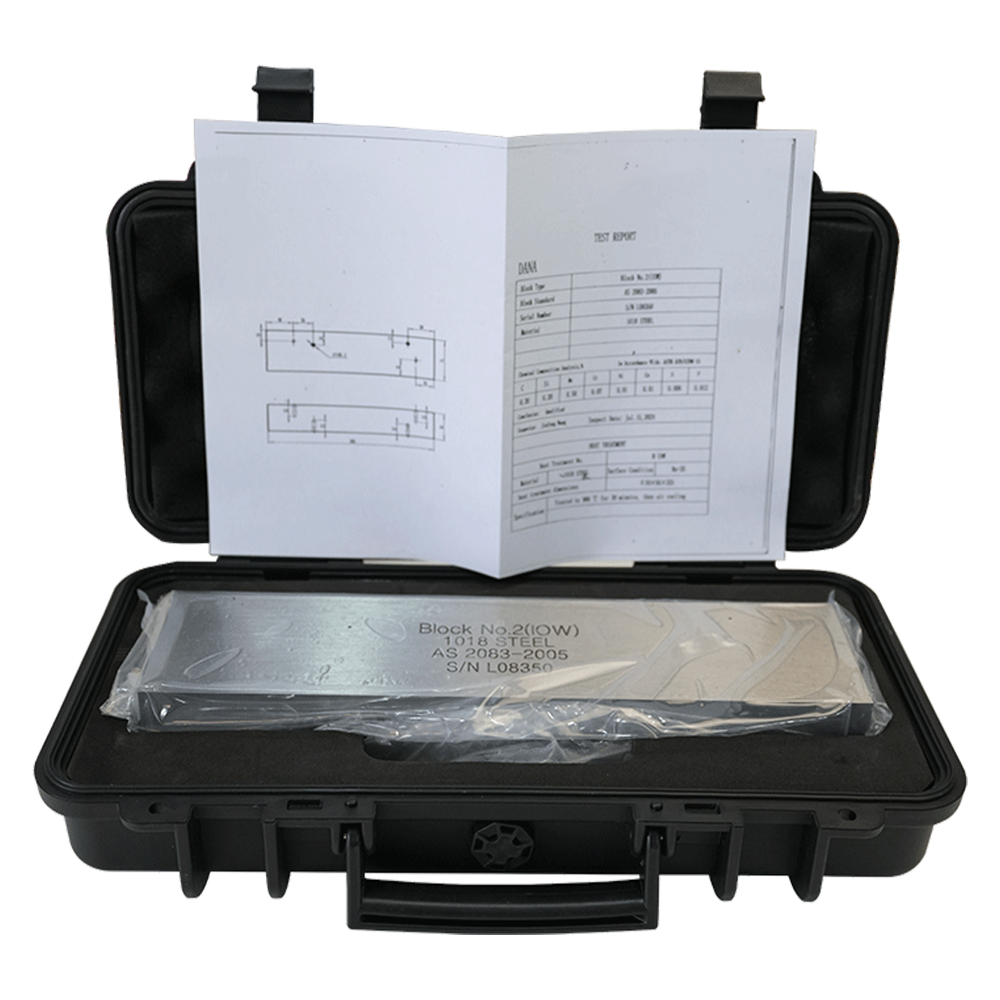
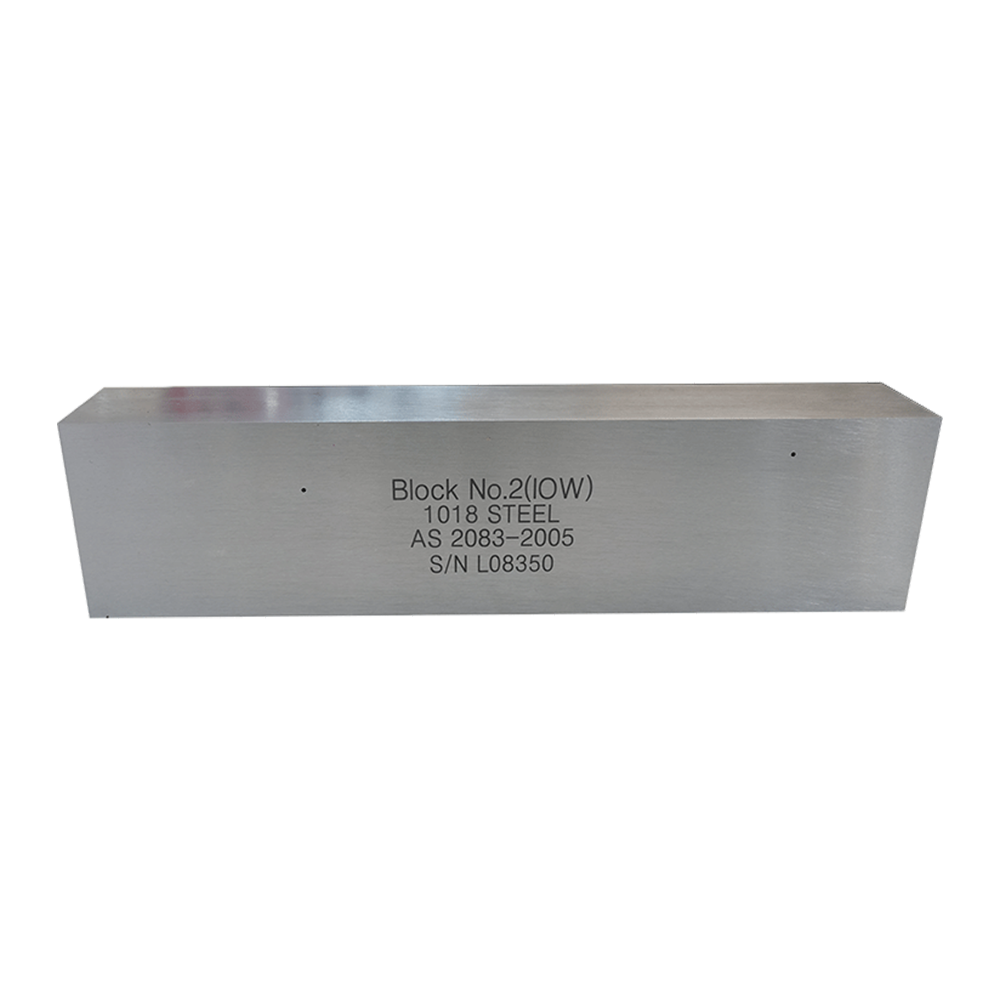

IOW Block Sales
Like other ultrasonic calibration blocks, the IOW block provides a set of precisely machined reference points—such as radii, holes, angles, and thickness steps—that allow technicians to verify the accuracy of ultrasonic instruments in real-world inspection scenarios.
Distance Calibration
Sensitivity Calibration
Shear-Wave Angle Verification
Beam Profile and Index Determination
Linearity Verification
Training & Education

Key Features of IOW Block
Designed for ultrasonic flaw detector calibration.
Contains radius sections, drilled holes, and angled surfaces.
Suitable for angle-beam and normal-beam probes.
Allows DAC (Distance Amplitude Correction) curve plotting.
Compatible with international standards (ASME, ISO, BS, EN).
Manufactured in steel, stainless steel, or aluminum.
Durable and reusable with proper care.
Available in customized versions for specific applications.
Technical Specifications of IOW Block
| Parameter | Description / Typical Value |
|---|---|
| Dimensions | Approx. 300 mm × 100 mm × 25 mm (varies) |
| Material | Carbon steel (most common), stainless steel, aluminum |
| Reference Holes | Side-drilled holes for sensitivity calibration |
| Radius Sections | Multiple radii for time-base verification |
| Angled Surfaces | For probe angle calibration (45°, 60°, 70°) |
| Standards | Based on IIW/ISO/ASME calibration requirements |
| Supported Calibration Types | Distance, sensitivity, angle, DAC, linearity |
Purpose of IOW Block in Ultrasonic Testing
The IOW block serves as a universal reference tool for UT calibration and training. Its primary purposes include:
Distance Calibration – Verifying time-base accuracy of flaw detectors.
Sensitivity Calibration – Adjusting instrument gain for reliable flaw detection.
Shear-Wave Angle Verification – Confirming probe refracted angle accuracy (45°, 60°, 70°).
Beam Profile and Index Determination – Locating the actual beam exit point on angle-beam probes.
Linearity Verification – Ensuring uniform amplitude and distance readings across the screen range.
Training & Education – Providing a practical tool for NDT training centers and operator certification.
Applications of IOW Block
1. Weld Inspection
Used to calibrate flaw detectors for detecting lack of fusion, porosity, slag inclusions, and cracks in weld joints.
2. Crack Detection
Simulates defects through reference holes and radii, ensuring reliable detection of surface and sub-surface flaws.
3. Shear-Wave Probe Calibration
Provides surfaces for verifying refracted angle accuracy and exit point of angle-beam probes.
4. DAC Curve Plotting
Allows inspectors to establish accurate DAC curves for flaw sizing at varying depths.
5. Training and Certification
Widely used in NDT schools and examination centers for ultrasonic training programs.
6. Pressure Vessel and Pipeline Testing
Ensures accurate calibration when inspecting welds in critical infrastructure.
IOW Block vs. Other Calibration Blocks
| Feature | IOW Block | IIW Type 1 Block | IIW Type 2 Block | DSC Block | DC Block |
|---|---|---|---|---|---|
| Distance Calibration | ✔ | ✔ | ✔ | ✔ | ✔ |
| Sensitivity Calibration | ✔ | ✔ | ✔ | ✔ | ✔ |
| Shear-Wave Probe Verification | ✔ | ✔ | ✔ | ✔ | ✘ |
| DAC Curve Plotting | ✔ | ✔ | ✔ | ✔ | ✘ |
| Size | Medium | Large | Medium | Compact | Compact |
| Training Use | ✔ | ✔ | ✔ | ✔ | ✔ |
Advantages of Using an IOW Block
Universal design compatible with multiple UT standards.
Versatile applications in weld inspection, probe calibration, and flaw detection.
Durable construction ensures long-term usage in lab and field conditions.
Supports operator training, making it ideal for schools and certification bodies.
Enhances inspection accuracy, reducing false calls and rework.
Available in different materials, including stainless steel for corrosion resistance.
Industries Using IOW Blocks
Oil & Gas – Pipeline weld inspections.
Aerospace – Aircraft structural weld and forging inspection.
Automotive – Engine and transmission weld calibration.
Power Generation – Turbine, boiler, and nuclear weld inspection.
Shipbuilding & Offshore – Structural weld quality assurance.
NDT Training Centers – For education, practice, and qualification exams.
Industries Using DSC Test Block
1. What is an IOW Block?
An IOW (International Institute of Welding) block is a standard calibration block used in ultrasonic testing (UT) to verify the accuracy, sensitivity, and performance of flaw detection equipment.2. What is the primary purpose of the IOW Block?
The IOW Block is designed to provide a standardized reference for calibrating ultrasonic flaw detectors, ensuring accurate flaw sizing and depth measurement in weld inspections and other NDT applications.3. Which industries use IOW Blocks?
IOW Blocks are widely used in industries such as shipbuilding, aerospace, oil and gas, power generation, and manufacturing, where ultrasonic testing of welds and materials is critical.4. How is the IOW Block different from an IIW Block?
The IOW Block is similar to the IIW (International Institute of Welding) block but may differ in dimensions and reference notches depending on specific standards. Both serve calibration purposes, but IIW Type 1 and Type 2 are more common internationally.5. What materials are IOW Blocks made from?
Typically, IOW Blocks are made of carbon steel, stainless steel, or aluminum alloys to match the acoustic properties of the materials being tested.6. Can IOW Blocks be customized?
Yes. While standard IOW Blocks follow specific guidelines, manufacturers can produce customized versions with different hole sizes, notches, or materials to meet special testing requirements.7. How do you use an IOW Block in ultrasonic testing?
The IOW Block is placed in contact with the ultrasonic transducer. By observing the reflected signals from holes, radii, or notches, the operator calibrates the flaw detector for sensitivity, resolution, and distance accuracy.8. What sizes and standards are available for IOW Blocks?
IOW Blocks are generally manufactured to conform to international NDT standards, though variations in size and design exist based on regional or industry-specific requirements.9. How often should an IOW Block be verified or recalibrated?
IOW Blocks should be periodically inspected for wear, surface damage, or corrosion. Depending on usage frequency, they may require verification or re-certification annually or as per industry regulations.10. Why are IOW Blocks important for ultrasonic testing?
IOW Blocks are essential because they provide a reliable reference to ensure that flaw detection equipment is performing accurately, reducing the risk of false readings and improving safety in critical applications.Why Global Clients Choose Us?
At NDTMachine, we are committed to providing high-quality thickness gauges that meet the demands of today’s industries. Our products are designed with a focus on accuracy, durability, and ease of use, ensuring that you can trust them for critical measurements. With years of experience in manufacturing NDT equipment, we have built a reputation for excellence and innovation.
40 Years of Expertise
We have 40 years of experience in the professional production of ultrasonic flaw detectors, an annual output of more than 10,00 ultrasonic flaw detectors, thickness gauges, ultrasonic probes and calibration blocks.
Talented Engineers and support team
As of September 2021, we have a total of 125 employees, including nearly 45 professional and technical workers who are masters or doctorate degree holders.
Advanced production equipment
We have Complete machining workshop, CNC, CNC machine tools, and more than 50 other types of processing equipment,to ensure high-precision product parts.
Excellent After-Sales Service
We provided excellent after-sales service, including fast delivery, online training, immediate feedback of trouble shotting.
Leave you Enquiry
Request an Appointment
Still not sure which NDT is right? Get a free initial consultation right now. Our team will analyze your needs and recommend the most suitable sensor for you