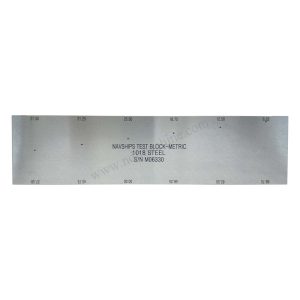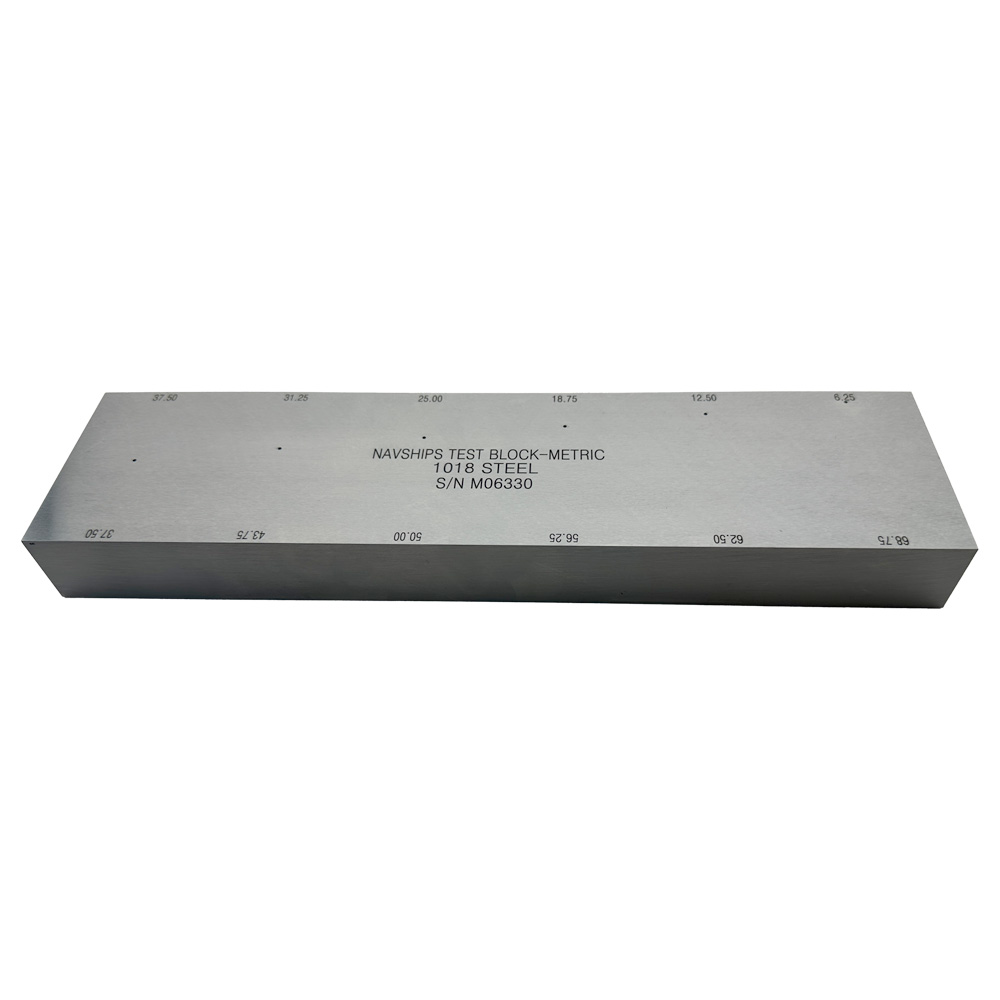
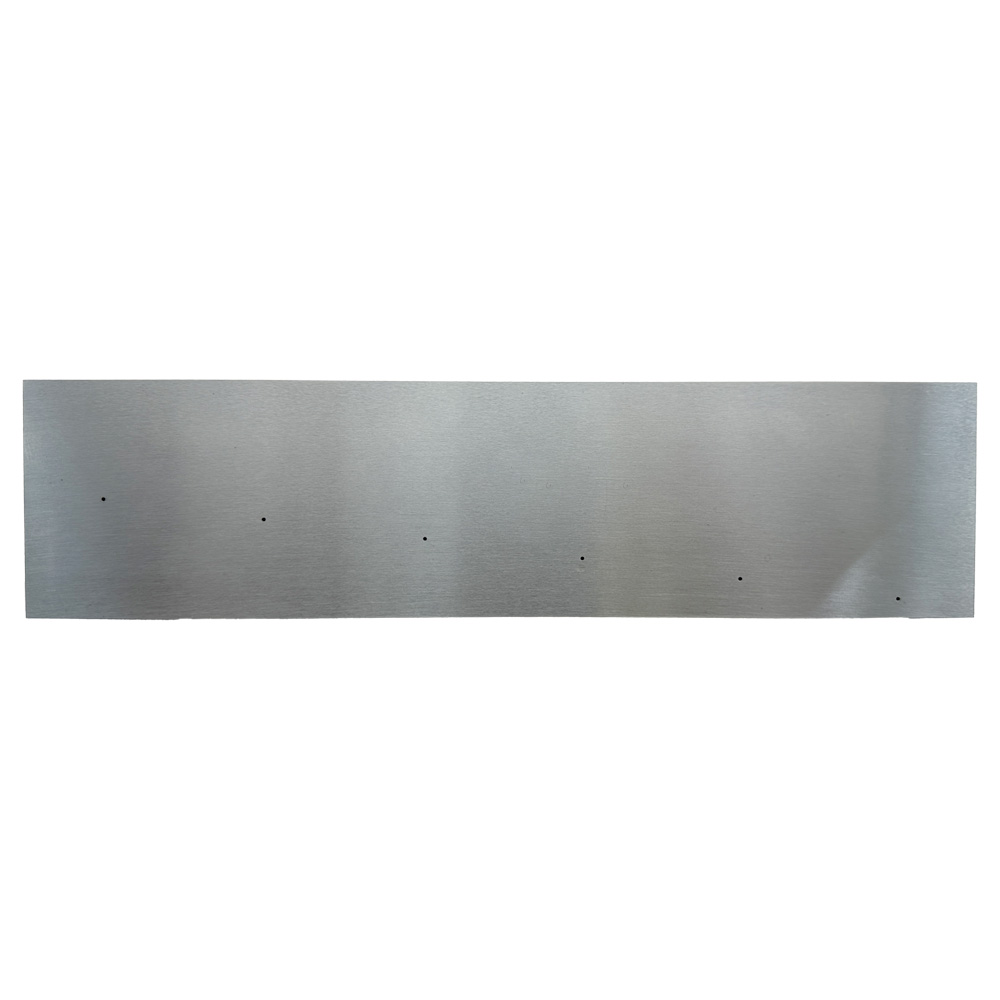
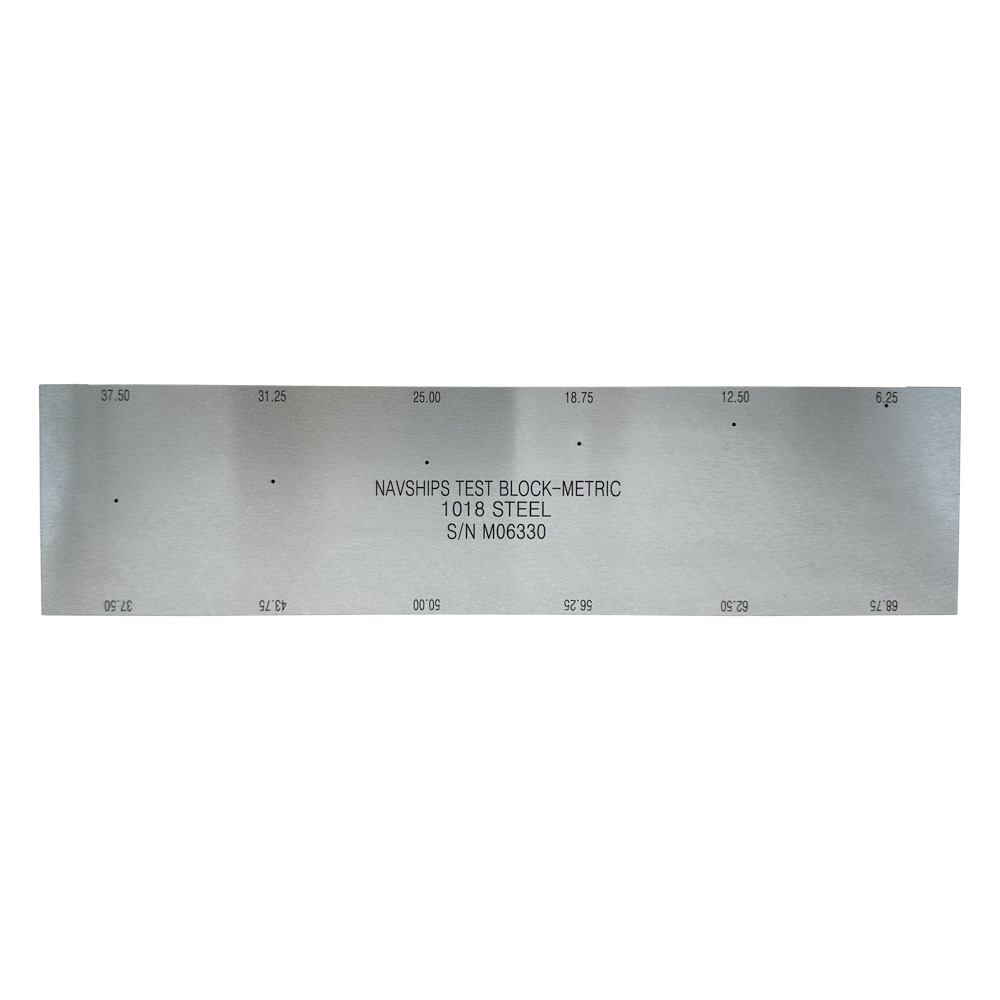
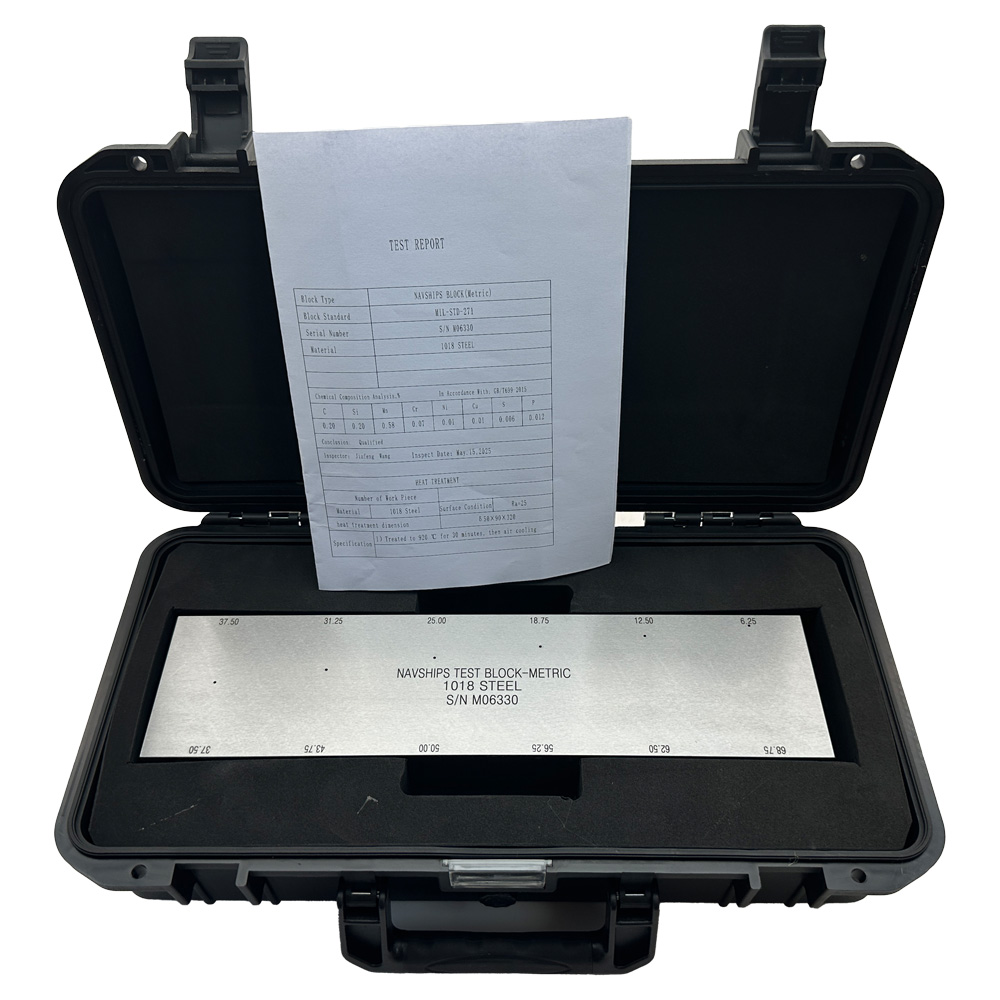
A NAVSHIPS Block, also known as the NAVSHIPS Test Block, is a standardized ultrasonic calibration block used primarily in military and naval ultrasonic testing (UT) applications. Originally developed by the United States Navy, this block is designed to ensure repeatable, accurate calibration of flaw detection systems, particularly when working with metallic materials like steel and aluminum.
NDTMachine supplies high-end NAVSHIPS Block. Contact us and get your NDT supplies at affordable price.
The NAVSHIPS Block allows technicians to verify instrument linearity, calibrate sensitivity, and check the time base of ultrasonic flaw detectors. It remains a key standard in defense, shipbuilding, and aerospace industries, especially in contexts where MIL-STD specifications apply.
| Feature | Description |
|---|---|
| Material | Typically carbon steel or aluminum |
| Dimensions | 6" × 3" × 1" (standard size) |
| Holes | 6 side-drilled holes at specific depths |
| Angle Beam Testing | Angled cut on one end for shear wave calibration |
| Flat Surface | For straight beam calibration |
| Engraved Markings | Hole locations, depths, and block serial numbers |
| Tight Tolerances | Precision-machined to strict dimensional accuracy (±0.01 mm) |
The NAVSHIPS Block is a versatile calibration standard used across:
Structural welds
Hull integrity checks
Pressure vessel testing
Aircraft frame inspections
Missile and rocket component testing
Aluminum alloy flaw detection
Pipe weld inspections
Subsea structure checks
Drilling equipment testing
Boiler inspections
Steam generator tube testing
NDT technician certification
Classroom demonstrations
Practical exams under military standards
The NAVSHIPS Block is primarily used to:
Calibrate time base and sensitivity of ultrasonic instruments
Verify linear amplitude response
Check dead zones in near-surface detection
Evaluate resolution and penetration of transducers
Standardize training and qualification for NDT personnel
Serve as a reference in system performance checks
It is especially useful for flaw detection in welds, plate material, castings, and structural components.
The NAVSHIPS Block typically includes:
Six Side-Drilled Holes (SDHs): Located at increasing depths from one end of the block to simulate flaws at different sound paths.
Angled Beveled Face: Often 45° to accommodate shear wave calibration.
Notch or Flat Bottom Holes (Optional): Some custom variants include surface notches or flat-bottom holes for specific calibration tasks.
Material Identification Stamp: Usually etched with material type (e.g., 1018 Steel or 6061 Aluminum), heat lot, and part number.
| Material | Description |
|---|---|
| 1018 Carbon Steel | Most common material; simulates shipbuilding steel |
| 6061-T6 Aluminum | Used for aerospace or lightweight structural applications |
| Custom Alloys | Available upon request for specialized industrial needs |
NAVSHIPS Blocks are widely referenced in military and industrial standards:
MIL-STD-2154 – Ultrasonic inspection of aerospace metallic structures
NAVSEA Technical Manual 0900-LP-003-7000 – Nondestructive Testing Methods, Ultrasonic Testing
ASME Section V – Nondestructive Examination
ASTM E127 – Standard guide for ultrasonic examination
ISO 2400 – Reference blocks for UT
Each block is delivered with a certification report showing dimensional verification, material composition, and reflector data.
| Benefit | Description |
|---|---|
| Standardization | Enables consistent calibration across organizations |
| Military-Grade Compliance | Matches U.S. Navy and DoD requirements |
| Multi-Flaw Simulation | Simulates various depths and flaw positions |
| Durability | Machined from solid blocks with corrosion-resistant finish |
| Ease of Use | Compact and portable design for field or lab use |
To maintain accuracy:
Store in a dry, clean location
Clean after each use to remove couplant residue
Avoid surface scratches or impacts on critical features
Re-certify periodically, typically every 1–2 years
Use protective cases during transportation
The NAVSHIPS Block is used for ultrasonic flaw detector calibration and system checks, particularly in military and naval applications.
Common materials include 1018 carbon steel and 6061 aluminum. Custom alloys are also available.
Yes, NAVSHIPS Blocks comply with ASME Section V, ASTM E127, and NAVSEA manuals.
It includes side-drilled holes (SDHs) at known depths to simulate internal reflectors.
Yes, the angled face allows shear wave angle beam probe calibration.
Absolutely. NAVSHIPS Blocks are widely used for training, certification, and military QA programs.
Re-certification is typically recommended annually or biannually, depending on frequency of use.
Yes, we can customize the block in material, flaw type, and dimensions per client requirements.
The NAVSHIPS Block is optimized for multi-depth flaw simulation and compliance with military specs, while the IIW block is more general-purpose.
Yes, each NAVSHIPS Block comes with traceable certificates, including dimensional accuracy and material verification.
At NDTMachine, we are committed to providing high-quality thickness gauges that meet the demands of today’s industries. Our products are designed with a focus on accuracy, durability, and ease of use, ensuring that you can trust them for critical measurements. With years of experience in manufacturing NDT equipment, we have built a reputation for excellence and innovation.
We have 40 years of experience in the professional production of ultrasonic flaw detectors, an annual output of more than 10,00 ultrasonic flaw detectors, thickness gauges, ultrasonic probes and calibration blocks.
As of September 2021, we have a total of 125 employees, including nearly 45 professional and technical workers who are masters or doctorate degree holders.
We have Complete machining workshop, CNC, CNC machine tools, and more than 50 other types of processing equipment,to ensure high-precision product parts.
We provided excellent after-sales service, including fast delivery, online training, immediate feedback of trouble shotting.
Leave you Enquiry
Still not sure which NDT is right? Get a free initial consultation right now. Our team will analyze your needs and recommend the most suitable sensor for you
Non-destructive testing equipment supplier | High-quality NDT machines | Customized solutions, one-stop procurement service.
Typically replies within minutes
Any questions related to Products: NAVSHIPS Block?
WhatsApp Us
🟢 Online | Privacy policy
WhatsApp us