
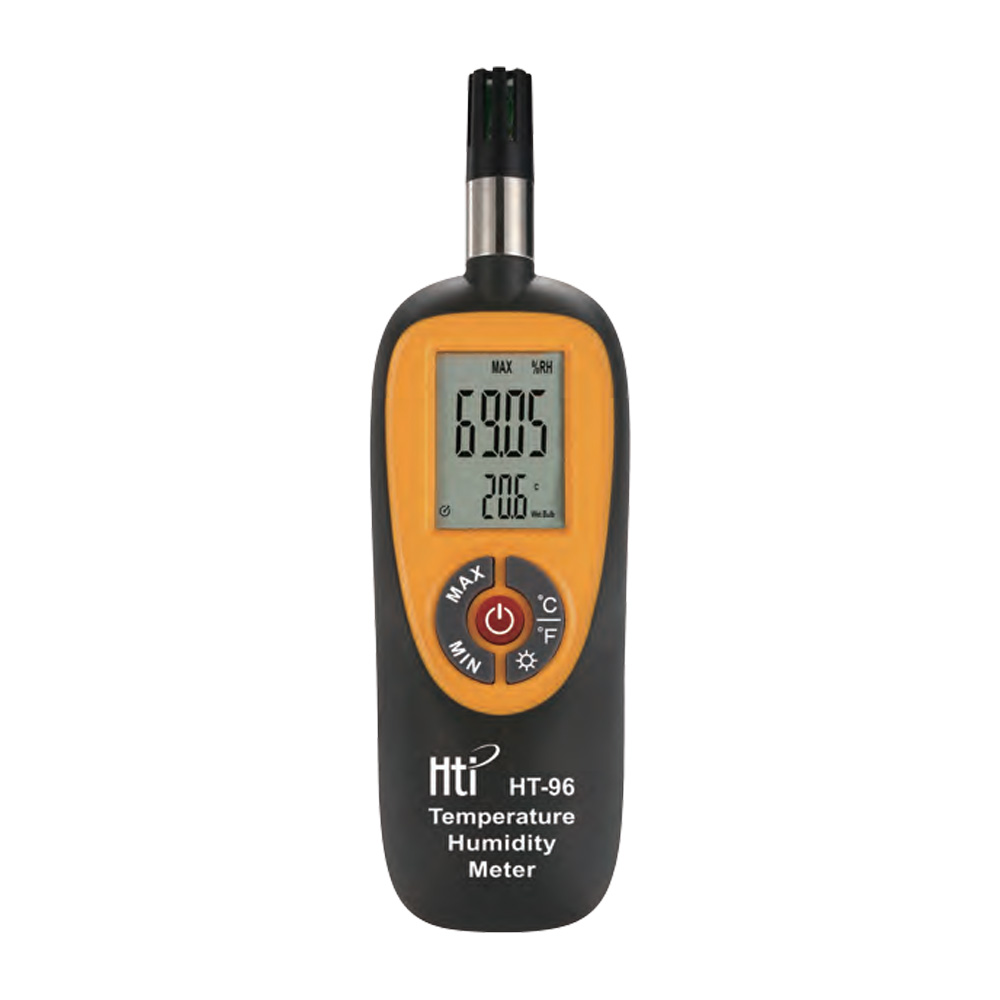
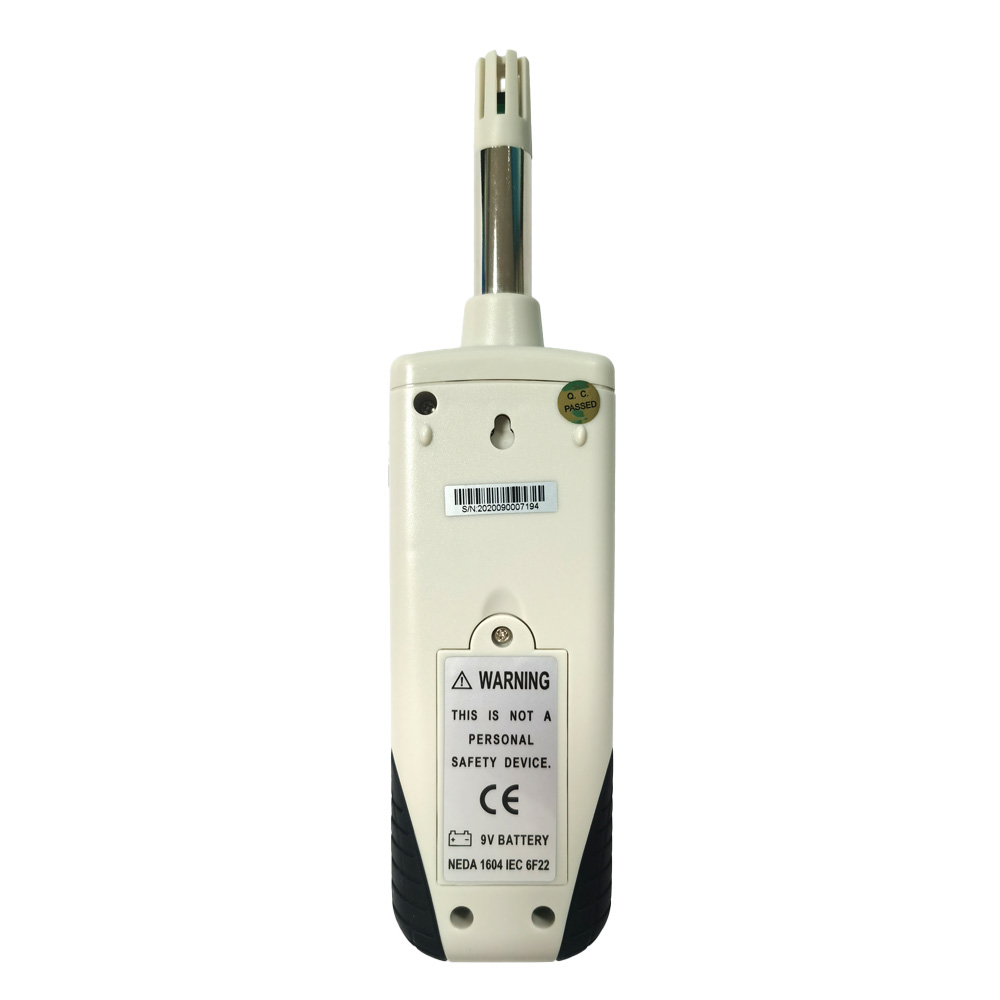

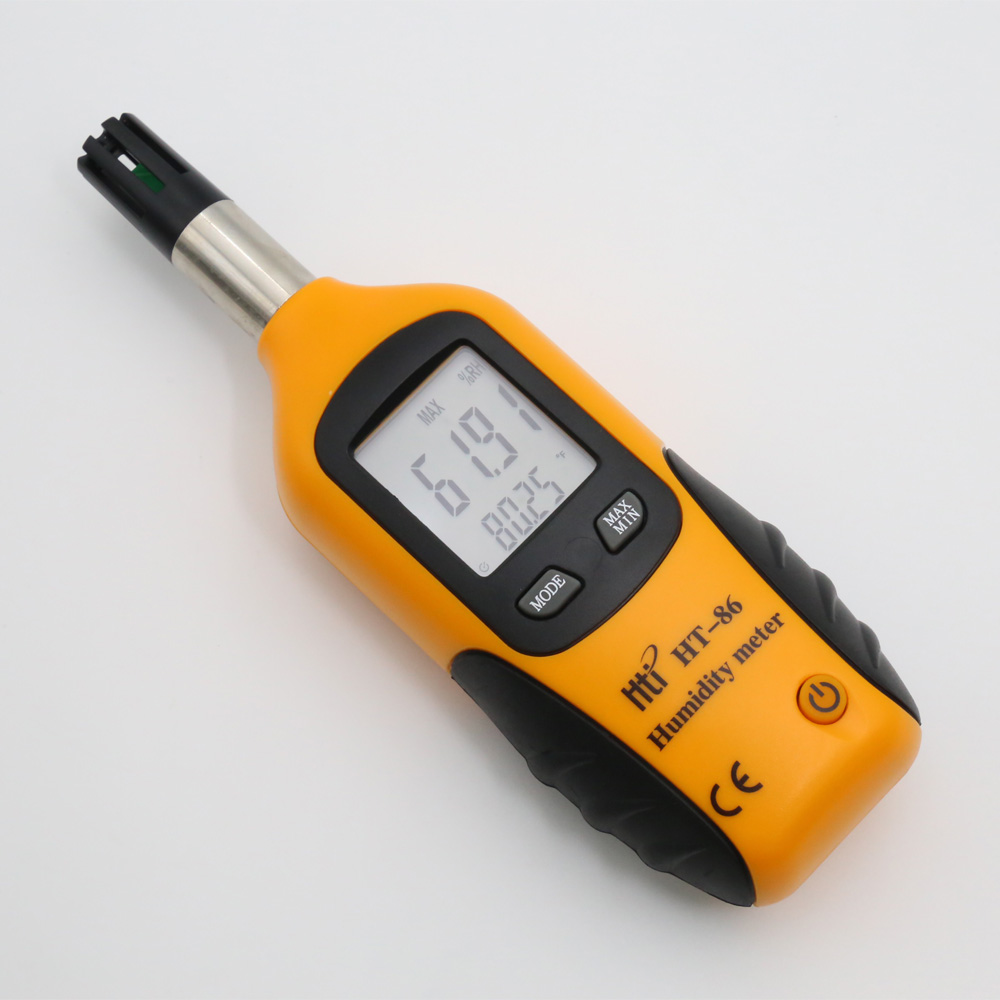
Explore professional thermohygrometers (also called thermo-hygrometers) that measure ambient temperature, relative humidity, dew point, and other environmental conditions. Ideal for HVAC/R, indoor air quality (IAQ), laboratories, manufacturing, archives, storage facilities, and industrial maintenance. Our selection covers handheld meters, data-logging models, smart Bluetooth versions, and fixed-mount probes with high precision.
NDTMachine supplies high-end Thermohygrometer. Contact us and get your NDT supplies at affordable price.
Compare ranges, accuracy, logging features and connectivity. Need help deciding? Reach out with your target application, environmental range, and data needs — our experts can help match the ideal unit for your requirements.
Dual-function measurement: temperature (°C/°F) and relative humidity (%RH) displayed simultaneously.
Dew point & wet bulb calculation: many models compute dew point and wet bulb temperature to assess moisture risk.
High accuracy sensors: Typical values might be ±0.3°C for temperature and ±2%RH for humidity in premium units.
Data logging & connectivity: logging intervals, USB/Bluetooth output, PC software support.
Handheld or fixed-mount versions: from portable inspection meters to permanent monitoring probes.
Wide measurement ranges: Temperature from -40°C to +70°C (or wider) and humidity from 0% to 100%RH (depending on model).
Real-time display and alarms: Many offer min/max memory, hold function, programmable high/low alarms.
| Type | Best For | Typical Features |
|---|---|---|
| Handheld Thermohygrometer | HVAC service, building inspection, IAQ surveys | Two-line display (T & RH), ergonomic case, built-in probe, battery powered |
| Data Logging Thermohygrometer | Environmental monitoring, labs, storage rooms | Logging memory, date/time stamp, PC export, ±1%RH accuracy |
| Bluetooth/Smart Thermohygrometer | Smart facility monitoring, IoT applications | App connectivity, cloud upload, alerts, remote monitoring |
| Fixed/Wall-Mount Thermohygrometer | Cleanrooms, warehouses, cold storage | Probe separation, wall bracket, display or remote readout, alarm outputs |
Temperature range & accuracy: e.g., -20 to +60°C with ±0.5°C accuracy.
Humidity range & accuracy: e.g., 0–100%RH with ±2%RH (10–90%).
Dew point calculation capability: useful for moisture risk evaluation.
Sensor response time: shorter response for fast changing environments.
Display features: backlit, dual reading, trend arrows.
Memory/Logging: Number of records, downloadable format.
Connectivity: USB, Bluetooth, SD card.
Calibration certificate: Traceable calibration increases credibility in QA environments.
Probe type & build: fixed or remote probe, rugged housing, IP rating.
Verify supply/return air conditions, humidity levels, indoor air quality, basement or crawl-space moisture risk.
Monitor climate conditions for products sensitive to humidity or condensation (wood, paper, electronics, pharmaceuticals).
Many processes (drying, coating, printing) require stable humidity and temperature.
Maintain controlled environmental conditions and log data for audits.
Protect artifacts by maintaining RH within safe limits and prevent degradation or mold.
Detect high humidity and temperature in control cabinets or HVAC ducts which may lead to corrosion or component failure.
Evaluate comfort conditions and identify conditions conducive to mold growth or poor ventilation.
A thermohygrometer uses two sensors:
Temperature sensor: typically a thermistor or RTD providing temperature reading.
Humidity sensor: often a polymer or capacitive sensor that responds to ambient moisture content.
These sensors send signals to the display/control unit where:
Relative humidity (%RH) is calculated based on ambient moisture and temperature.
Dew point or wet bulb temperature can be calculated to assess moisture saturation risk.
Logging functions store data for later export or analysis.
Regular calibration ensures accuracy by comparing the sensors to known temperature/humidity standards.
Quick spot checks → handheld basic.
Long-term monitoring + data export → logging model.
Smart integration with facility systems → Bluetooth/IoT version.
Fixed wall coverage in rooms → wall-mount probe system.
For critical environments (labs, QA, archives) choose models with ±1%RH humidity accuracy, calibration certificate, and maybe ISO/IEC 17025 traceability.
Make sure the instrument covers the expected extremes: e.g., refrigerated conditions (-10°C) or hot environments (+60°C); humidity up to 100%RH if needed.
If you must keep records or generate reports, ensure the device supports memory, PC export or wireless connection.
Field service meters benefit from shock-proof casing, pop-up stands, magnetic back, remote probe, and long battery life.
For fixed mounting or remote probe placement, select models with separate probe. For handheld use, integrated probe is fine.
At NDTMachine, we are committed to providing high-quality thickness gauges that meet the demands of today’s industries. Our products are designed with a focus on accuracy, durability, and ease of use, ensuring that you can trust them for critical measurements. With years of experience in manufacturing NDT equipment, we have built a reputation for excellence and innovation.
We have 40 years of experience in the professional production of ultrasonic flaw detectors, an annual output of more than 10,00 ultrasonic flaw detectors, thickness gauges, ultrasonic probes and calibration blocks.
As of September 2021, we have a total of 125 employees, including nearly 45 professional and technical workers who are masters or doctorate degree holders.
We have Complete machining workshop, CNC, CNC machine tools, and more than 50 other types of processing equipment,to ensure high-precision product parts.
We provided excellent after-sales service, including fast delivery, online training, immediate feedback of trouble shotting.
Leave you Enquiry
Still not sure which NDT is right? Get a free initial consultation right now. Our team will analyze your needs and recommend the most suitable sensor for you
Non-destructive testing equipment supplier | High-quality NDT machines | Customized solutions, one-stop procurement service.
Typically replies within minutes
Any questions related to Products: Thermohygrometer?
WhatsApp Us
🟢 Online | Privacy policy
WhatsApp us


