Rockwell Hardness Tester – Precision & Efficiency in Hardness Testing
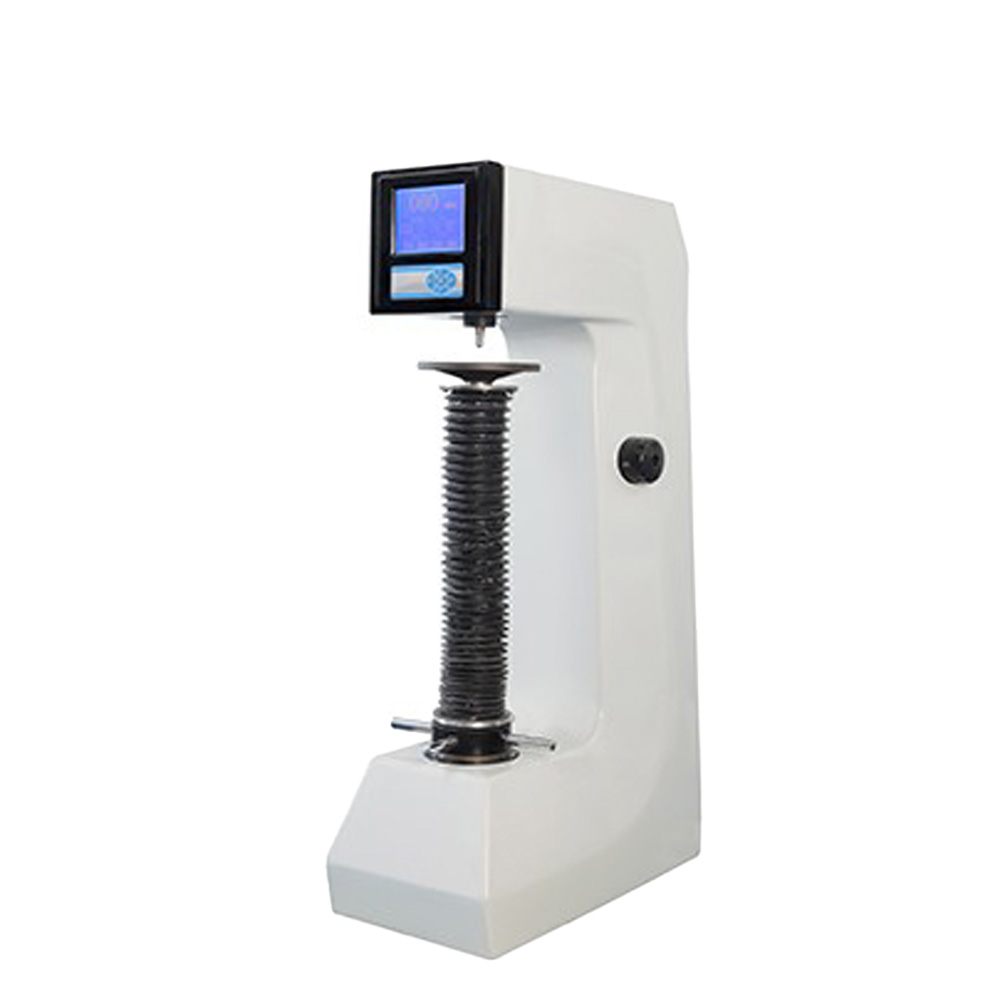
A Rockwell Hardness Tester is one of the most widely used instruments for determining the hardness of metals and certain plastics. Invented in 1919 by Hugh and Stanley Rockwell, this method provides a quick, direct, and non-destructive way to measure the hardness of materials based on penetration depth, not optical measurement like other methods.
NDTMachine supplies high-end Rockwell Hardness Tester. Contact us and get your NDT supplies at affordable price.


Rockwell Hardness Tester Sale
The test involves applying a fixed load using a steel ball or a diamond cone (called a Brale), and the depth of indentation is automatically converted into a hardness number, displayed either via analog dials or digital readouts.
Speed
Simplicity
Versatility
Repeatability
Minimal surface damage
Real-time digital readout
Applications of Rockwell Hardness Tester
Metallurgy and Heat Treatment
Assessing quenching and tempering effectiveness
Automotive Industry
Gears, crankshafts, valves, and other critical parts
Aerospace Components
Structural alloys and treated metals
Plastic and Polymer Testing
With appropriate light-load scales
Quality Control Labs
Batch testing and certification processes
Field Testing
With portable testers on pipes, tanks, and welds
Types of Rockwell Hardness Testers
Simple and cost-effective
Ideal for occasional use and general workshop testing
2. Digital Rockwell Hardness Tester
Electronic readouts eliminate reading errors
Some models offer automatic loading/unloading
Fully motorized systems for consistent results
Ideal for mass production and high-volume QC
4. Portable Rockwell Testers
Lightweight and compact
Perfect for large workpieces and on-site testing
Rockwell Hardness Scales
Different Rockwell scales are used depending on the material type and expected hardness range:
| Scale | Indenter | Major Load | Typical Use |
|---|---|---|---|
| HRC | Diamond cone (Brale) | 150 kgf | Hardened steel, alloy steel |
| HRB | 1/16" steel ball | 100 kgf | Soft steel, brass, copper |
| HRA | Diamond cone | 60 kgf | Tungsten carbide, thin steel |
| HRF | 1/16" steel ball | 60 kgf | Plastics, aluminum |
| HR15N, HR30N, HR45N | Diamond cone | 15, 30, 45 kgf | Thin materials, coatings |
| HR15T, HR30T, HR45T | Steel ball | 15, 30, 45 kgf | Plastics, soft materials |
Advantages of Rockwell Hardness Testing
| Feature | Benefit |
|---|---|
| Speed | Complete test in seconds |
| Simplicity | No optical reading or microscope required |
| Versatility | Wide range of materials from soft plastics to hard metals |
| Repeatability | High consistency in test results |
| Minimal surface damage | Small indentations mean non-destructive testing |
| Real-time digital readout | Improves accuracy and record-keeping |
Rockwell vs Other Hardness Testing Methods
| Method | Indenter | Measurement | Use Cases |
|---|---|---|---|
| Rockwell | Steel ball or diamond cone | Depth | Fast industrial testing |
| Brinell | Large steel/tungsten ball | Diameter | Large, rough components |
| Vickers | Diamond pyramid | Diagonal length | Thin materials, coatings |
| Knoop | Elongated diamond | Microindentation | Micro-scale or thin coatings |
| Mohs | Scratch resistance | Scale 1–10 | Minerals and quick tests |
Working Principle of Rockwell Hardness Test
The Rockwell Hardness Test works by measuring the difference in depth of penetration under two different loads:
Minor Load: Typically 10 kgf, applied first to establish a reference point and settle the material.
Major Load: An additional load (usually 60, 100, or 150 kgf) applied to make a deeper indentation.
Measurement: After removing the major load (while keeping the minor load), the depth difference is measured and converted into a Rockwell Hardness Number (HR).
The entire process is fast, efficient, and does not require optical systems, making it ideal for industrial use.
Compliance Standards
Ensure the tester complies with relevant standards for international accuracy:
ASTM E18 – American Rockwell hardness standard
ISO 6508 – International Rockwell hardness standard
GB/T 230 – Chinese national standard
These standards define tolerances, methods, calibration, and acceptable accuracy levels.
How to Choose the Right Rockwell Tester
Material Type: Choose the scale appropriate for your material (e.g., HRC for steel).
Testing Volume: Manual for small batches; automated for high throughput.
Accuracy Needs: Digital models reduce human error.
Mobility: Choose a portable tester if field testing is required.
Data Output: Some models support data export for documentation and traceability.
Important Testing Guidelines
The specimen surface should be clean, flat, and properly supported.
The material must be thick enough (at least 10 times the depth of indentation).
Use the appropriate scale and load for the material.
Ensure calibration with standard test blocks.
Do not place indentations too close together (or near edges).
Frequently Asked Questions (FAQ)
1. What is the Rockwell hardness test used for?
The Rockwell hardness test is used to measure the resistance of a material to deformation by a standardized indenter under a specific load. It helps determine the suitability of materials for various industrial applications.
2. What materials can be tested with a Rockwell tester?
Common materials include carbon steel, stainless steel, aluminum, brass, copper, plastics, and some ceramics, depending on the scale and indenter used.
3. What’s the difference between HRC and HRB?
HRC uses a diamond cone indenter and 150 kgf load, suitable for hard materials. HRB uses a 1/16″ steel ball and 100 kgf load, ideal for softer materials like brass and aluminum.
4. Is Rockwell hardness testing destructive?
No, it is considered non-destructive, especially since the indentations are small and typically do not affect the usability of the part.
5. How accurate is a Rockwell hardness test?
When properly calibrated and operated under standard procedures, it offers repeatable results within ±1 Rockwell unit for most scales.
6. Can a single tester handle multiple Rockwell scales?
Yes, many modern testers allow interchangeable indenters and adjustable loads to accommodate different scales.
7. How often should I calibrate my Rockwell tester?
Calibration should be done every 3 to 6 months or more frequently in high-use environments. Certified hardness test blocks are used for verification.
8. Can Rockwell hardness be converted to tensile strength?
For steels, there’s a rough correlation between Rockwell hardness (especially HRC) and tensile strength, but conversion should be done using standardized charts.
9. How deep is the Rockwell indentation?
Depending on the scale and material, indentations typically range from 0.1 mm to 0.5 mm deep.
10. Why is my tester giving inconsistent readings?
Possible causes include improper surface preparation, worn indenter, unstable support, incorrect scale usage, or calibration drift.
Why Global Clients Choose Us?
At NDTMachine, we are committed to providing high-quality thickness gauges that meet the demands of today’s industries. Our products are designed with a focus on accuracy, durability, and ease of use, ensuring that you can trust them for critical measurements. With years of experience in manufacturing NDT equipment, we have built a reputation for excellence and innovation.
40 Years of Expertise
We have 40 years of experience in the professional production of ultrasonic flaw detectors, an annual output of more than 10,00 ultrasonic flaw detectors, thickness gauges, ultrasonic probes and calibration blocks.
Talented Engineers and support team
As of September 2021, we have a total of 125 employees, including nearly 45 professional and technical workers who are masters or doctorate degree holders.
Advanced production equipment
We have Complete machining workshop, CNC, CNC machine tools, and more than 50 other types of processing equipment,to ensure high-precision product parts.
Excellent After-Sales Service
We provided excellent after-sales service, including fast delivery, online training, immediate feedback of trouble shotting.
Leave you Enquiry
Request an Appointment
Still not sure which NDT is right? Get a free initial consultation right now. Our team will analyze your needs and recommend the most suitable sensor for you


